About Peter
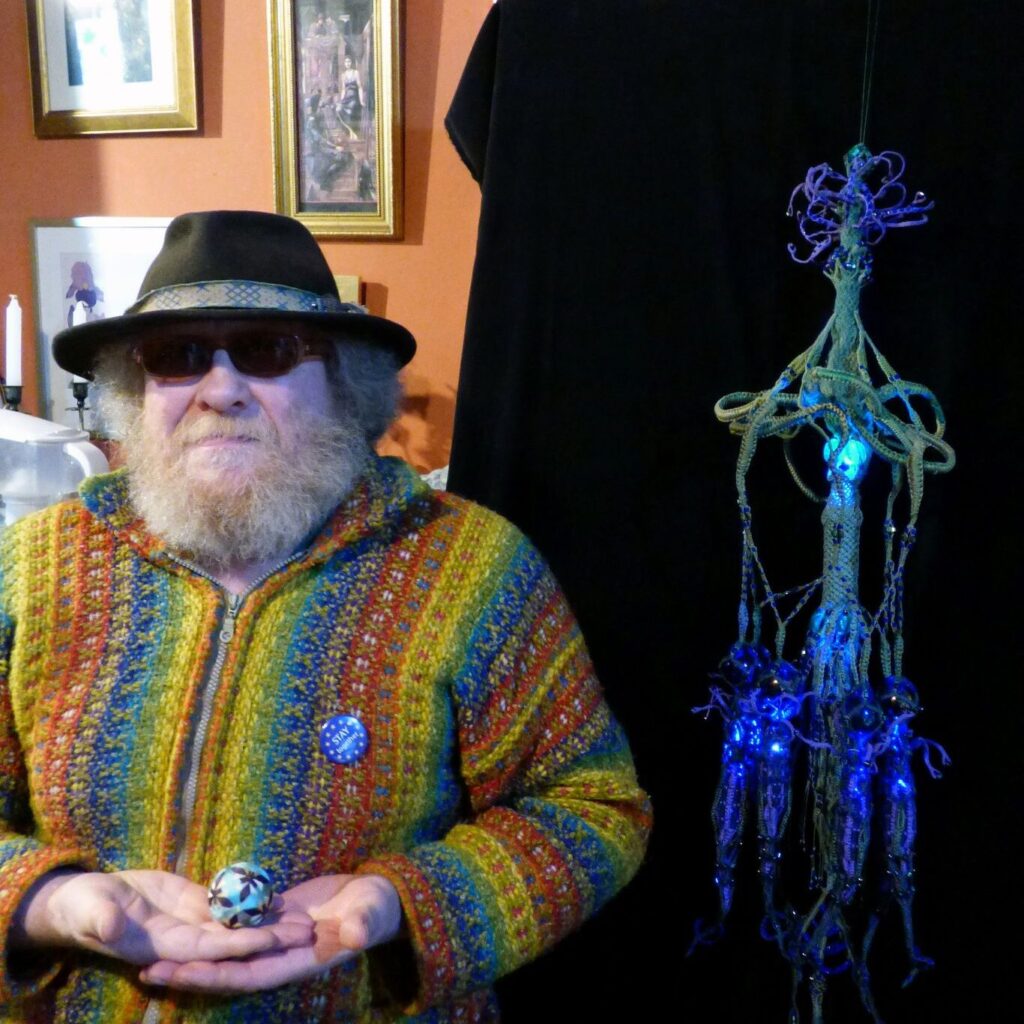
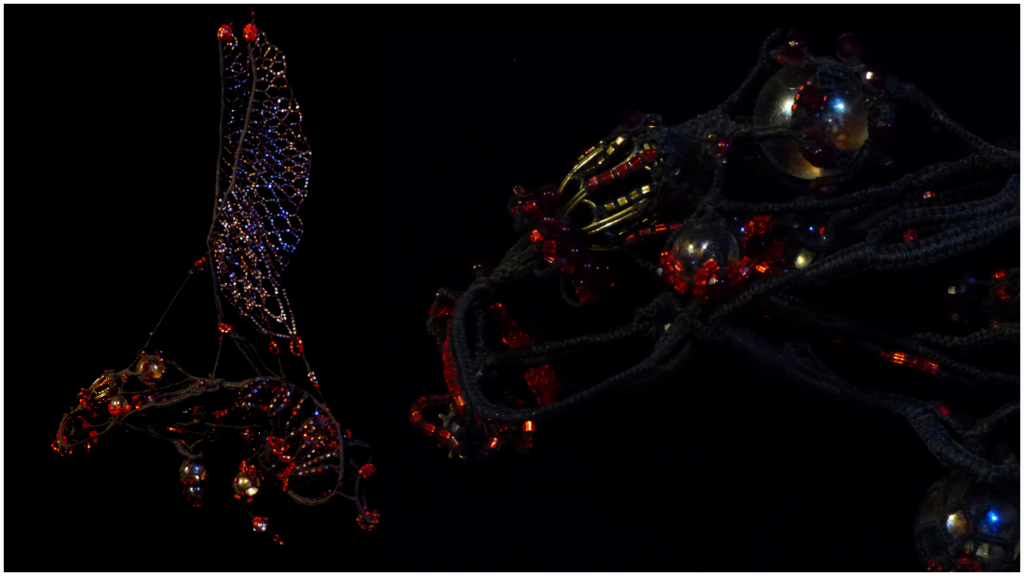
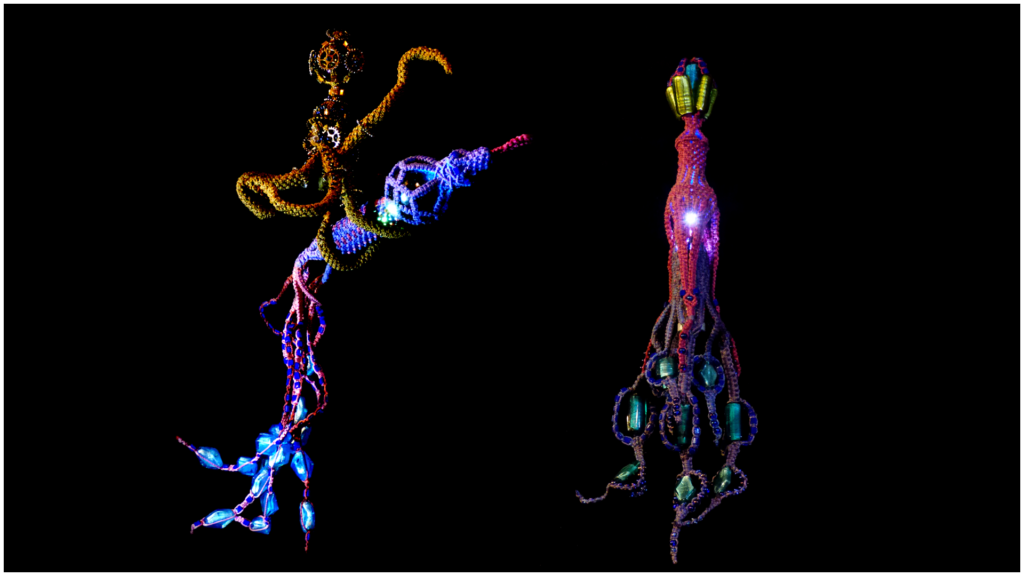
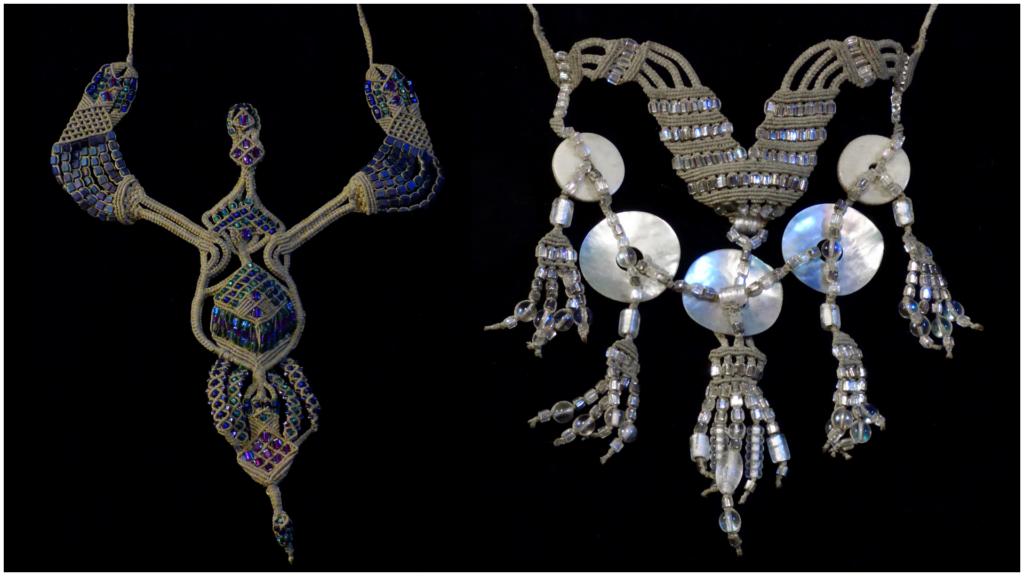
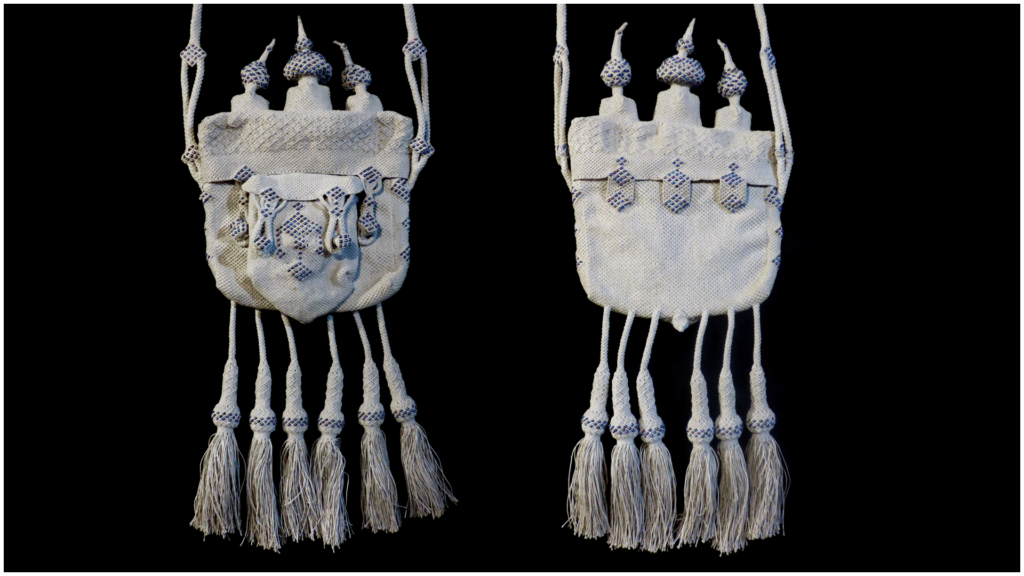
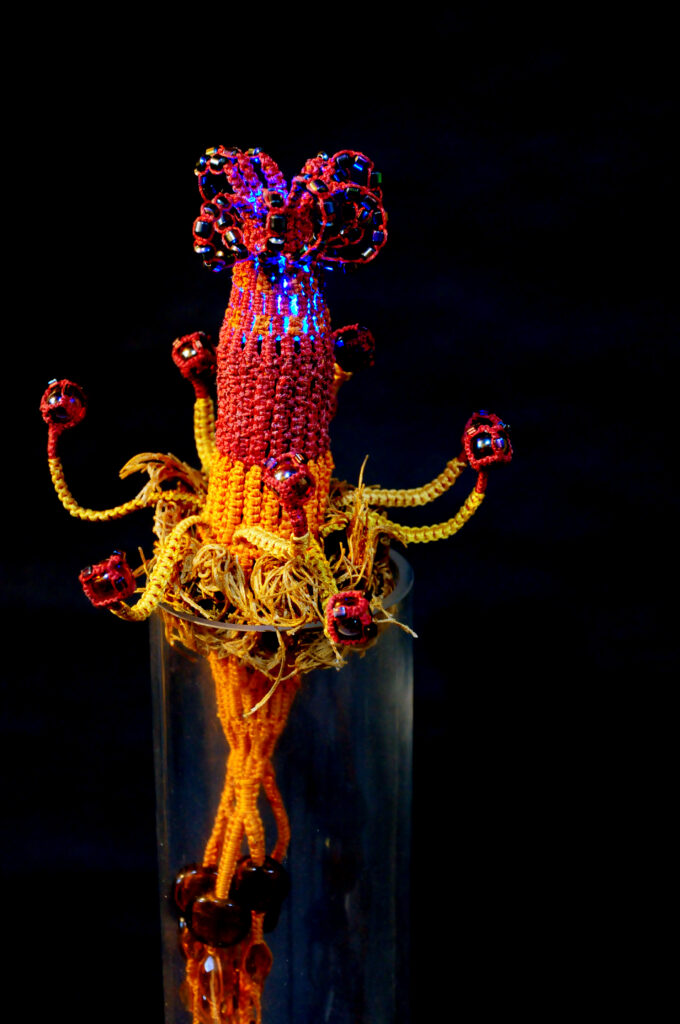
Peter The Knotter was born in 1951 in Hampstead, London. He grew up as an orphan and had – despite being recognised as highly gifted at a young age – no continuous formal education beyond the age of 10. He started working at age 14 and experienced a multitude of different professions throughout his life, often working several jobs at a time to make ends meet. Peter lived abroad for many years and called countries like Spain, Morocco, France and Germany his temporary home, which all – together with his ancestral roots from Scotland and West-Africa and his fascination for Japanese culture – shaped and influenced his work. As an artist Peter was almost entirely an autodidact. He first came across a book on macrame in his early twenties and has worked with string and knots ever since, well into his last year on earth. He soon developed his unique approach to this art-form, firstly specialising in ethnically inspired jewellery featuring beads from all over the world, beautifully ornamented bags and other items for either practical and/or decorative use. Later on he added large, colourful, organically inspired three-dimensional objects to his repertoire, featuring myriads of beads and glass marbles, which were often illuminated by incorporated lights mimicking bio-luminescence.
Peter had several very well received small exhibitions of his work in the South-West of England,
which is where he was living until he passed away in the 7th of November 2026. Sadly he could in the end not fulfill his dream of finishing his book to share his vast knowledge about and beyond knots as well as his skill for story telling, his imagination and his vision of a gentler world. But Syl might be able to rectify this is the futures, as Peter has left a lot of huge fragments of writing behind as well as a treasure of knotted objects, sculptures and jewellery.
A Brief Notice on Peter’s Work
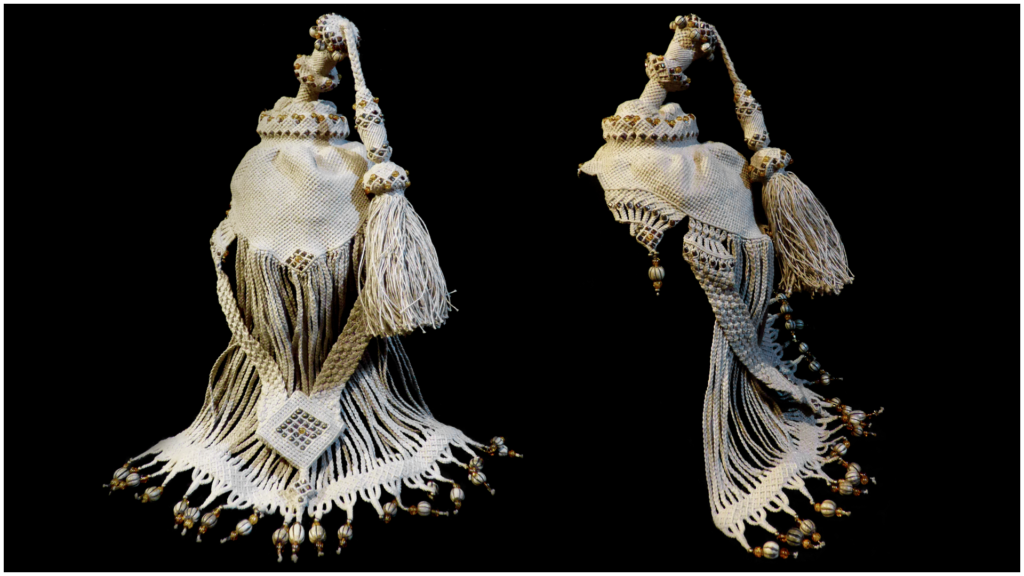
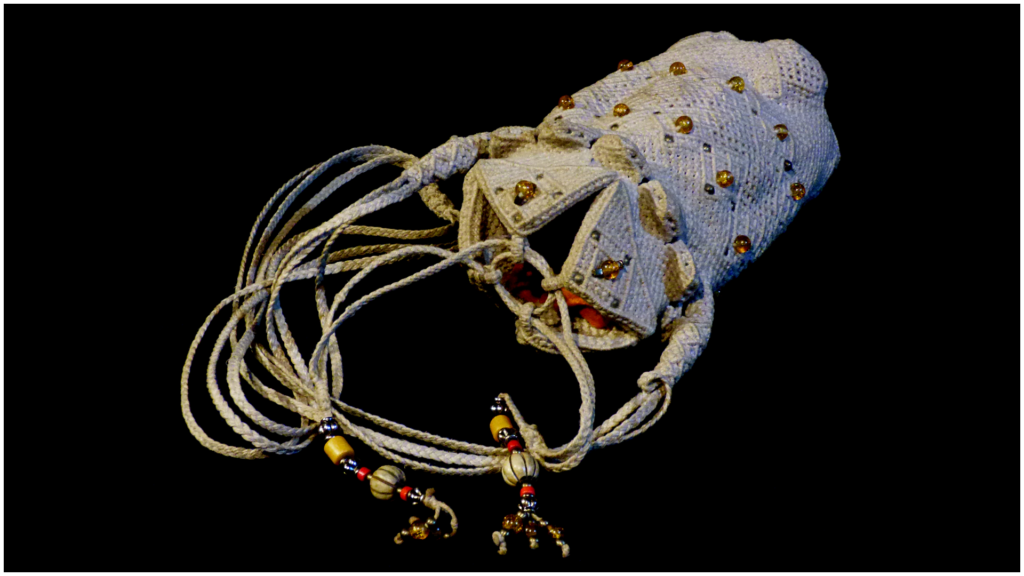
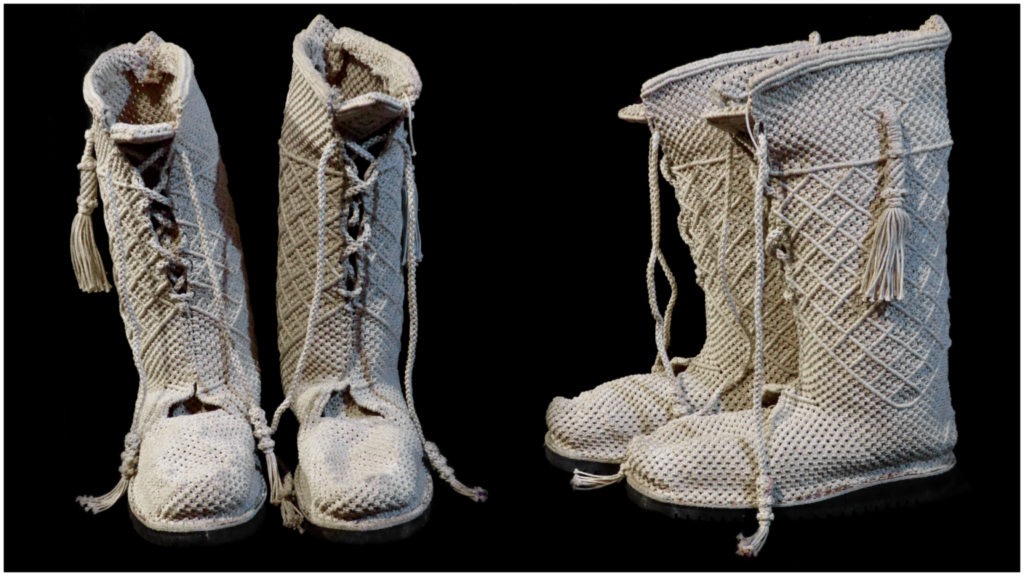
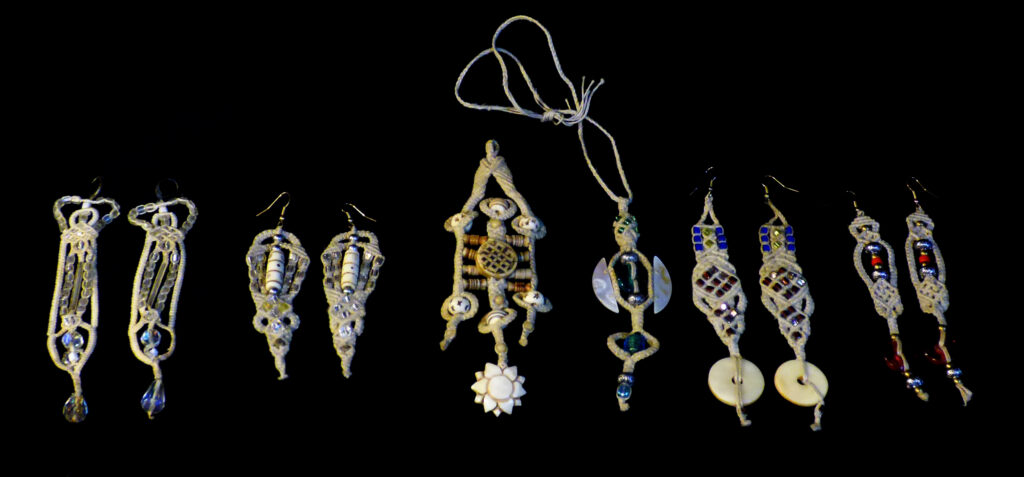
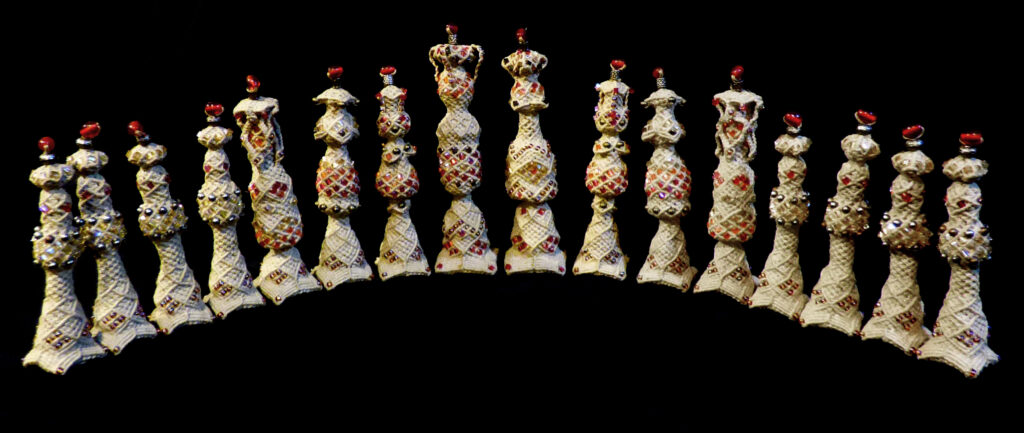
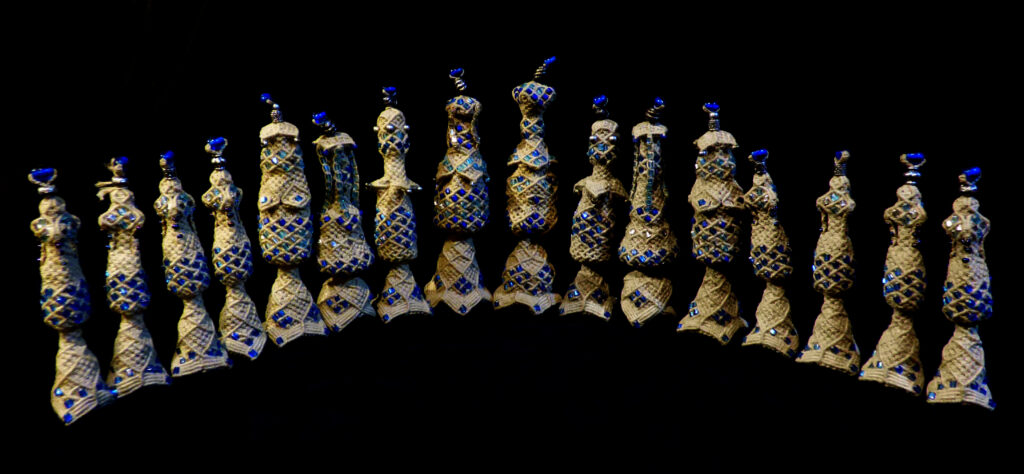
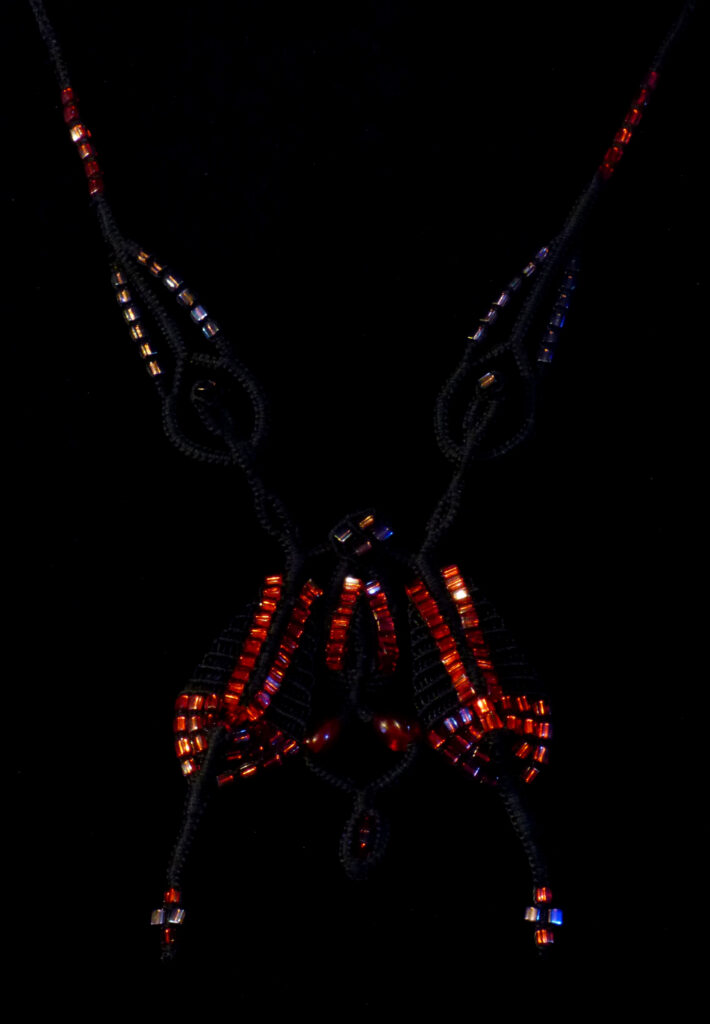
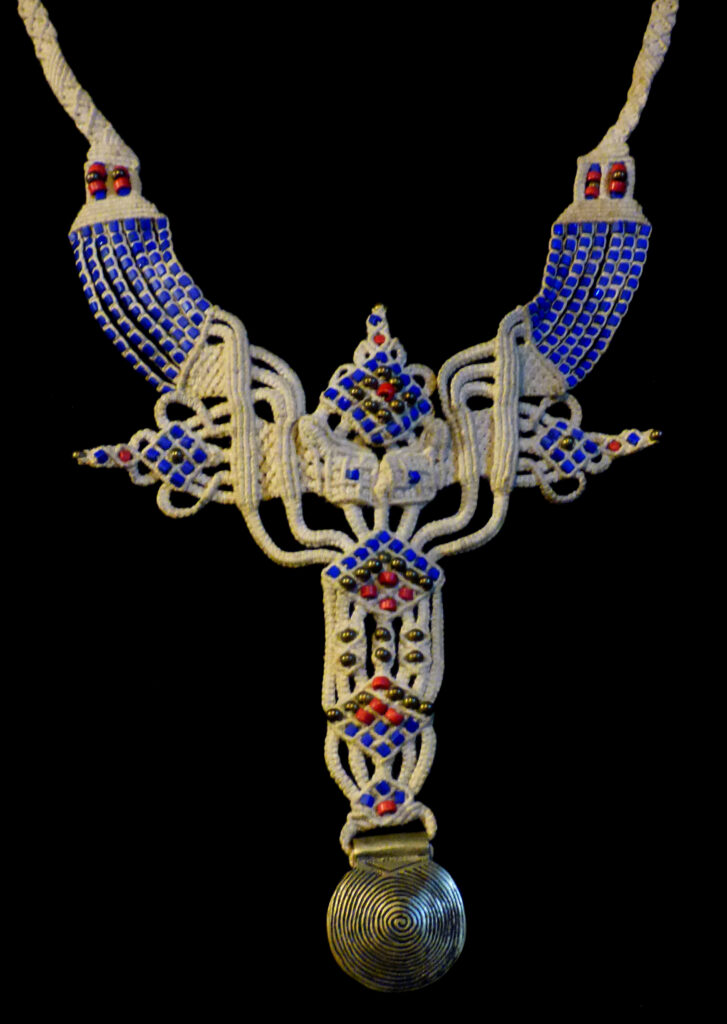
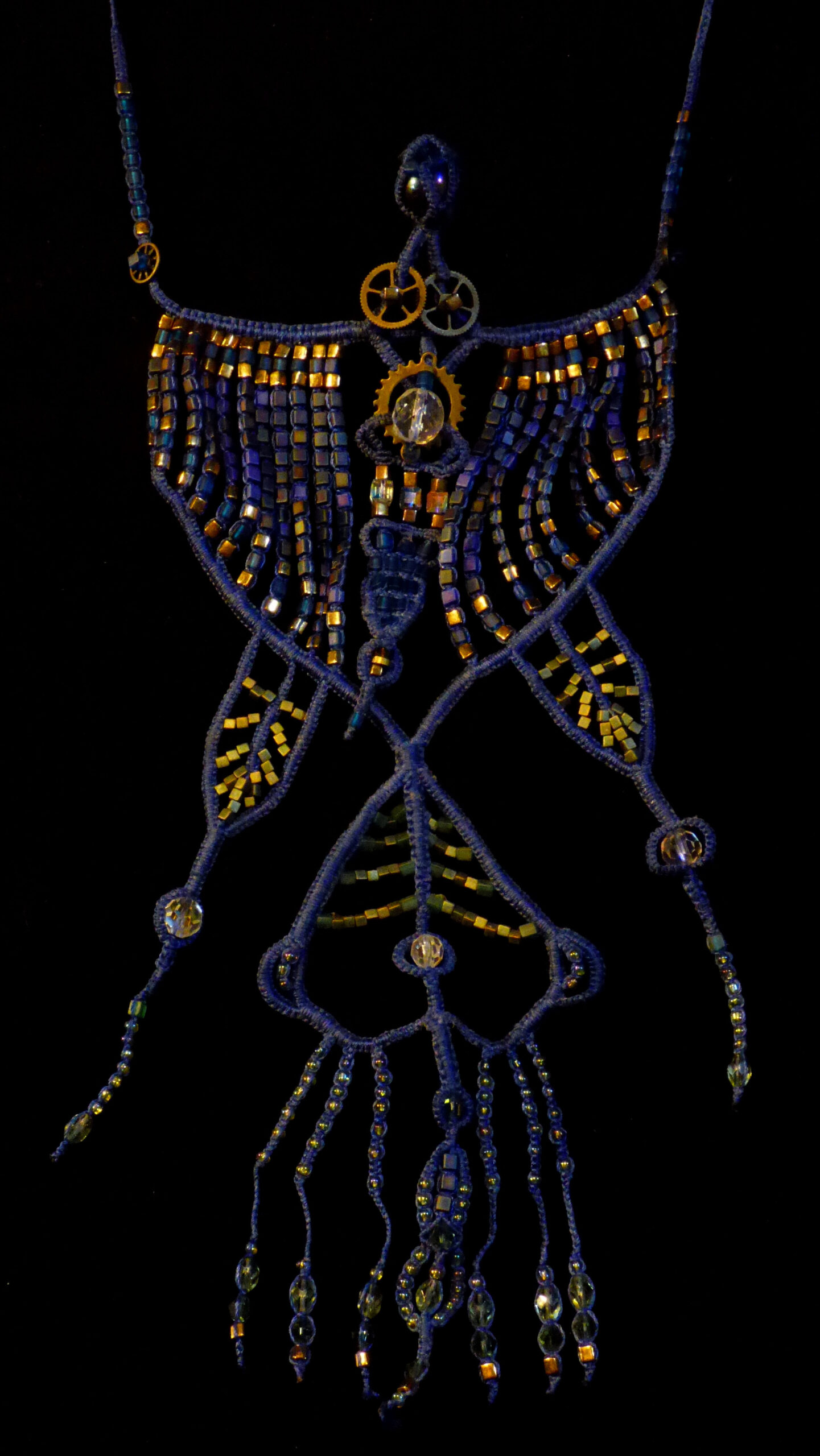
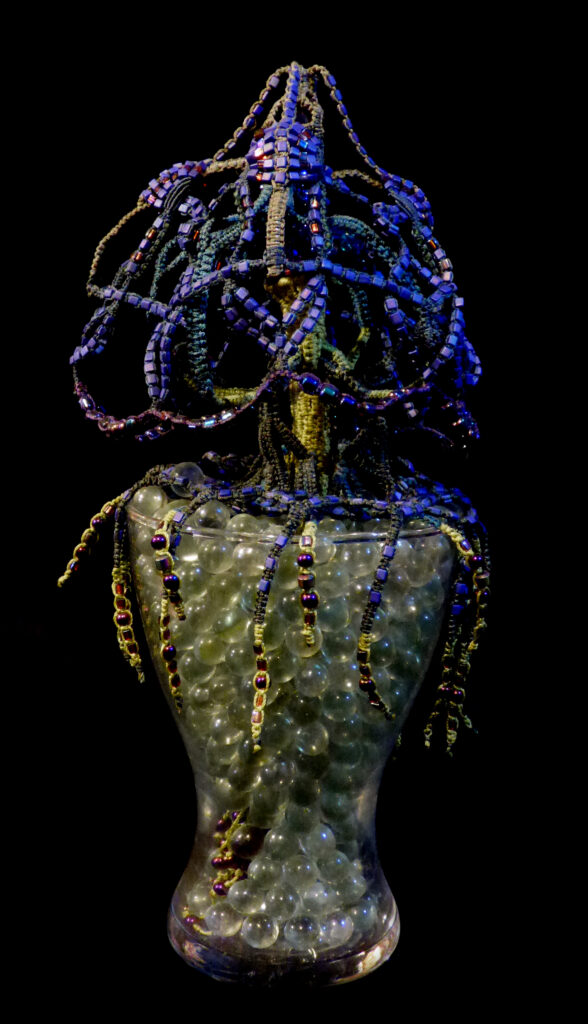
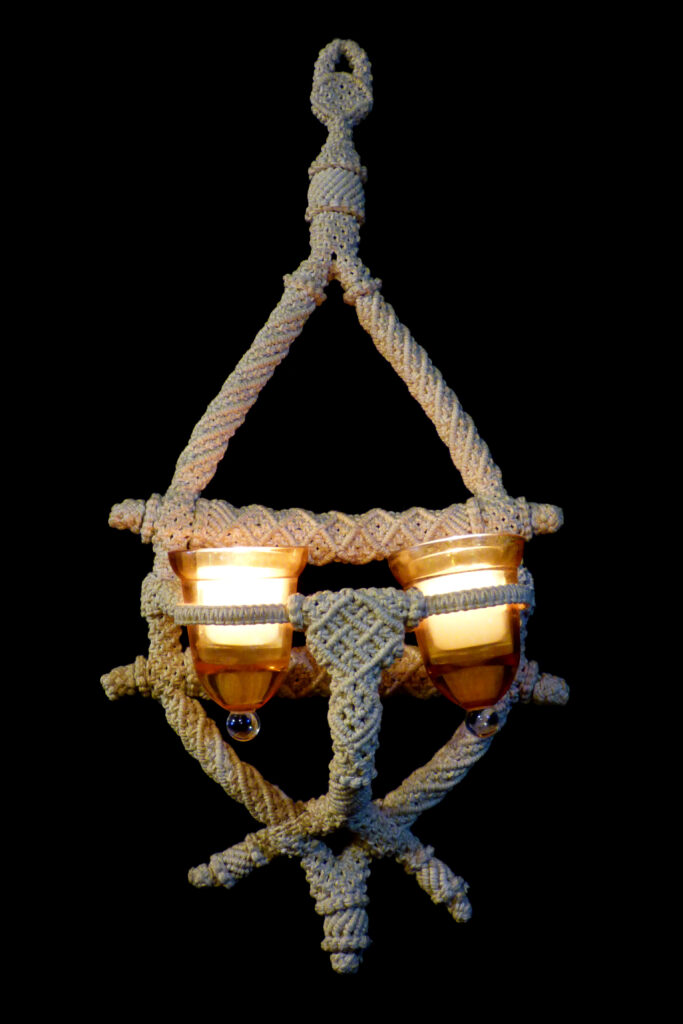
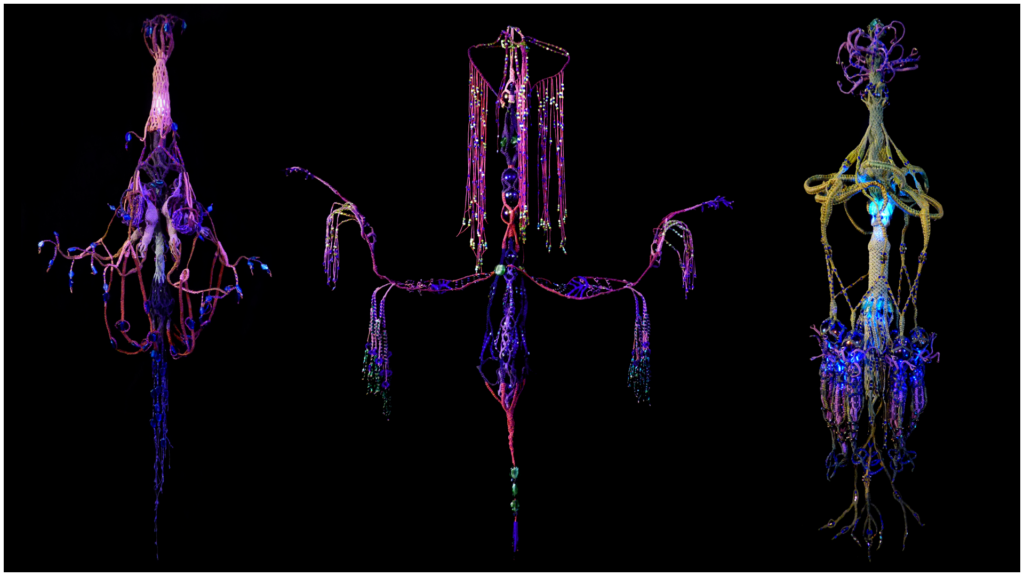
All of Peter‘s creations shown here were only created with a small variety of knots (mostly Square
Knot, Clove Hitch, Lark‘s Head and Overhand Knot), natural or artificial fibers (mostly flax, C-
Lon or S-Lon), findings, myriads of glass, metal, stone, shell and bone beads, glass marbles, some
with carefully hidden small electrical torches (integrated in a way, that batteries can be replaced) and very rarely metal objects and wire. The structures hold their shape without any wire-skeletons, simply by the strong tension of knots, which can give them – if needed – a rigid structure. Most of the pieces where photographed hung up against a black backdrop or suspended with one or more invisible strings from above. The size of the objects ranges from a medium sized necklace up to a sculpture of human height. The biggest pieces are made of several 10,000s of knots and may have taken 9 to 12 months to finish, whilst some of the smaller necklaces were easily made within a day or two. Peter only very rarely draws drafts for a piece and usually develops shapes and structures intuitively during the creation process. Sometimes very small projects, like a pair of earrings, get transformed into huge head-pieces or sculptures with this sort of creative approach. If you watch the pictures carefully, you may also notice that hardly any of his pieces has loose string-ends showing, apart from those he deliberately crafted into beautiful tassels, for example for the Isfahan Bag on page 20. Peter is very skilled in hiding and avoiding any sorts of non-decorative loose ends and shows amazing skills in seamlessly joining one compartment of an object with another.
All of Peter‘s pieces have surprising backstories and were inspired by many different things he has come across during his peripatetic years as well as things inspired by his own quasi-fictional writing.